
PERIFACT has the convenient ability to customize layouts yourself. It is a powerful tool with very many features.
ADVICE: READ THIS ARTICLE RIGHTLY AND ATTENTIONALLY. And make adjustments in small steps. And see if the result is satisfactory
The start
The report builder can be started via menu "SETTINGS - ADJUST LAYOUTS". Because PERIFACT supports multiple companies, first make the choice for which company you want to start customizing the layout. Then make the choice in which category you want to customize: Invoices and quotations, Packing slip or Warehouse slip. Next, choose the layout that will be used as basic is going to serve for your own changes.
Next to the layout name are 3 small buttons. One is for a custom layout to delete, one is for the customize of a layout and the latter is for layouts to import created on another computer, for example. You can also go through all the steps of the screen and by using the [Next] button and at the last step open the report builder.
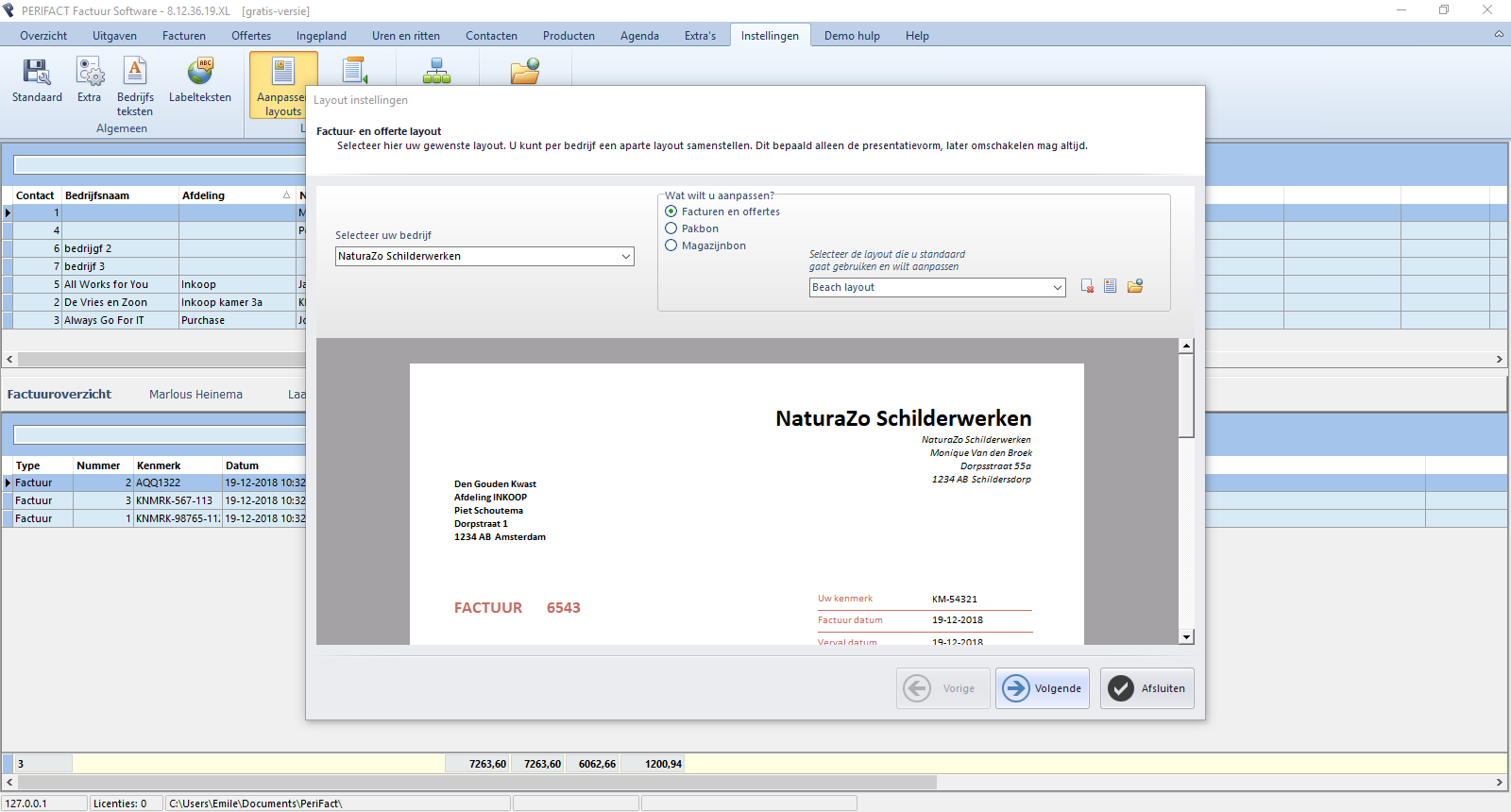
Report builder
The report builder will look something like this, depending on your chosen layout.
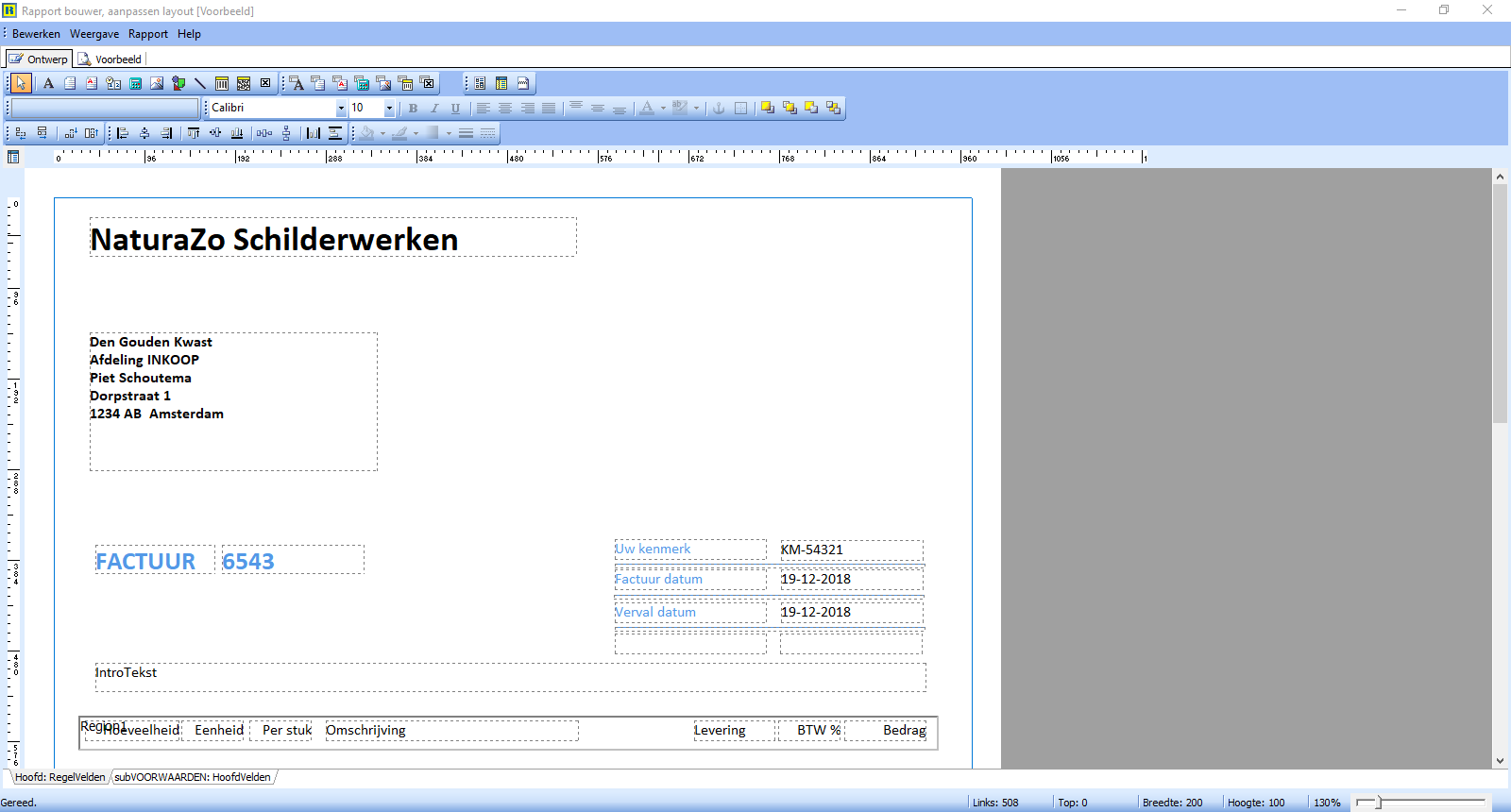
Sections
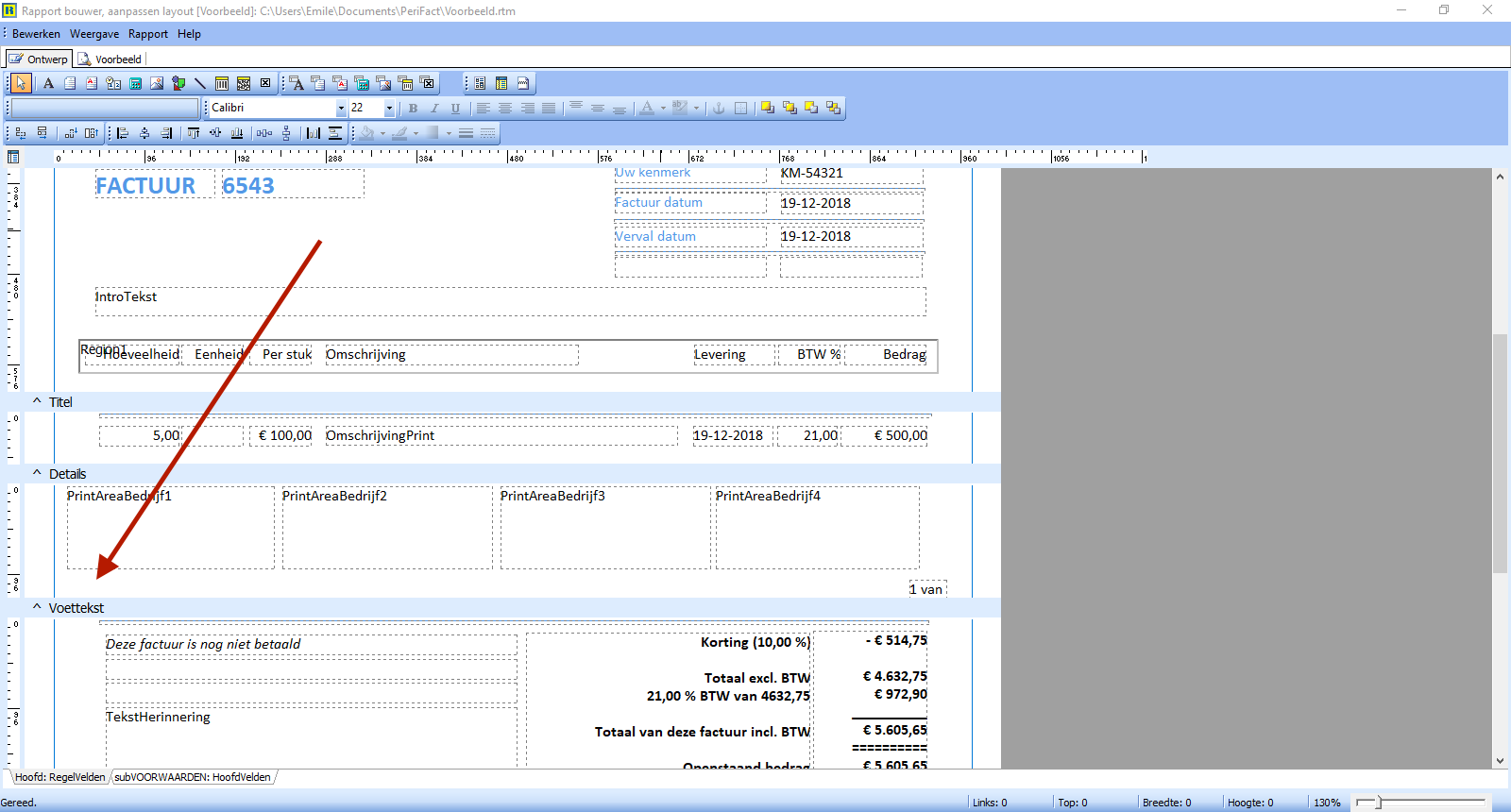
If you scroll through the report you will see as in the image below that there are different sections. In the image below you can see an arrow near the "Footer" section.
- Section TITLE; all the parts listed here come only on the first page
- Section DETAILS: these are the invoice/quote lines. If you have so many lines that they no longer fit on 1 page then automatically a next new page are created
- Section FOOTTEXT: this comes at the bottom any page
- Section SUMMARY: this comes as closure of the invoice/quote and thus become one-time shown.
Types of items
It is important to note that there are 2 kinds items can appear on the layout.
- Static items: these are parts that as the name implies do not change. For example, a line, a square, but also a fixed text.
- Dynamic items: These are components that are extracted from the PERIFACT database. And get their value when printing or PDF creating the report. For example, such as customer name, invoice number, unit price, quantity, etc.
The majority of all items on the report will be of the type dynamic are.
Placing static part
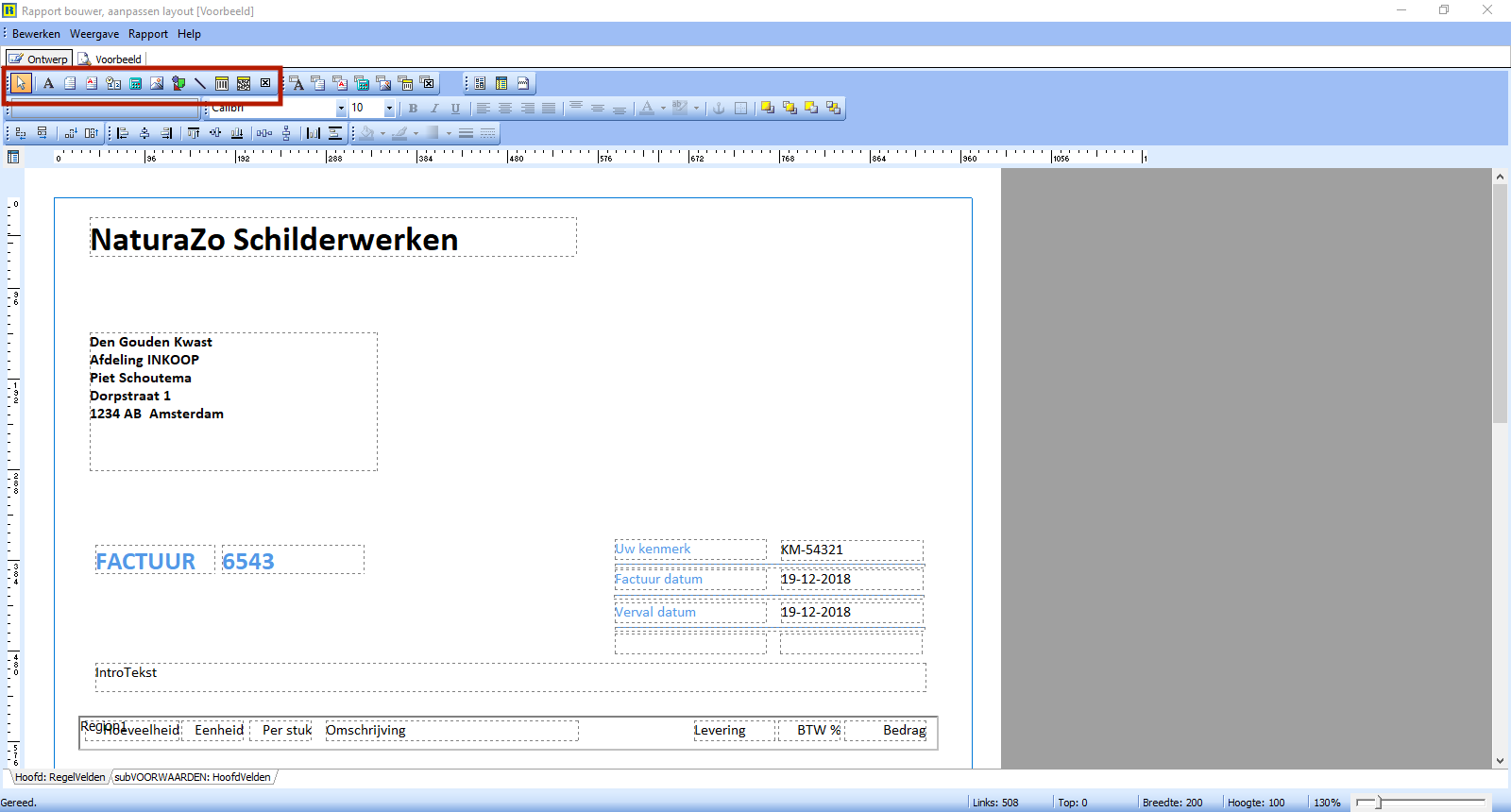
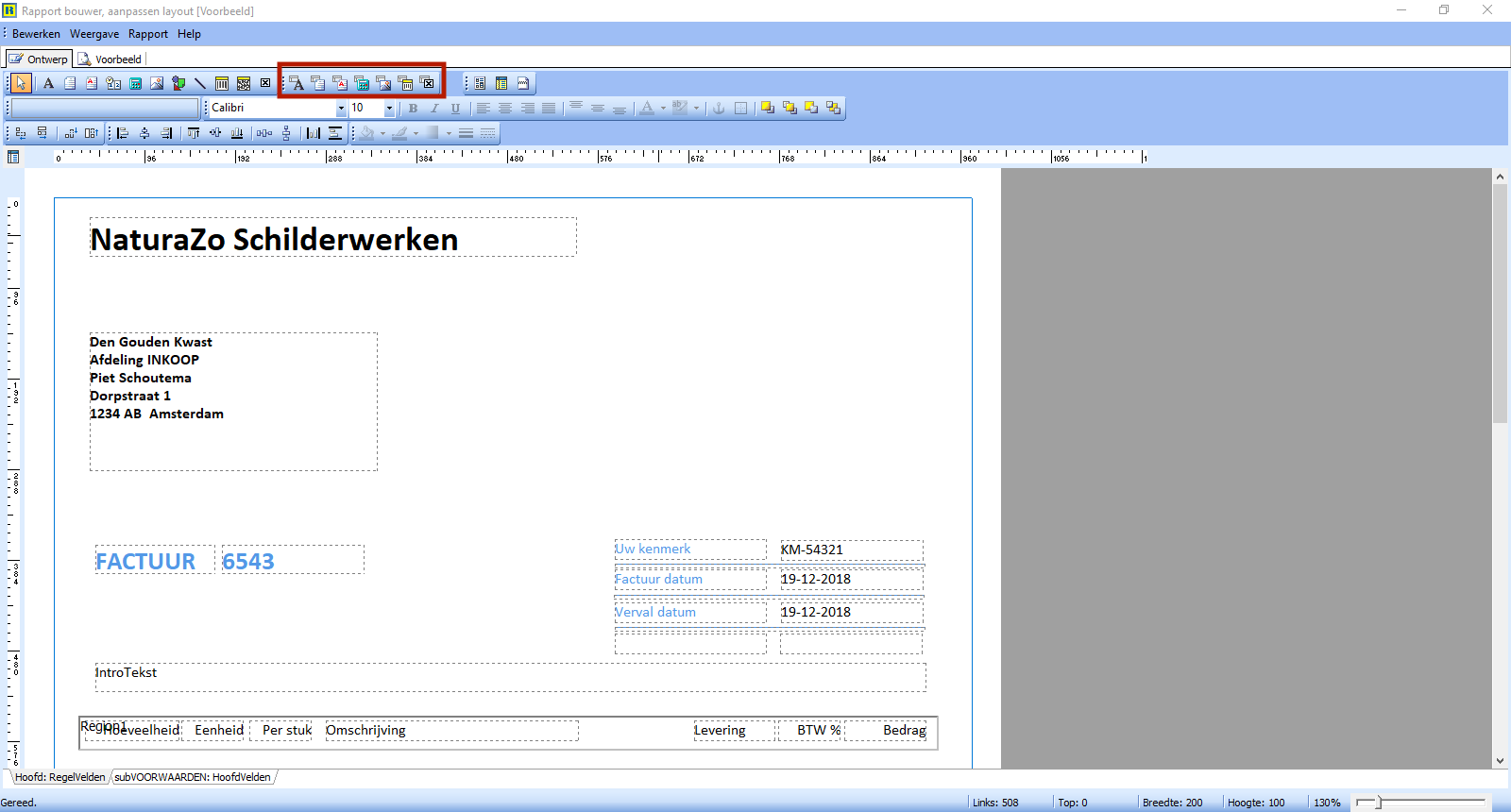
Would you like a static add item ( line, figure, fixed text) then you can click on the toolbar of the report builder. And drag it to the section See the red outlined area:
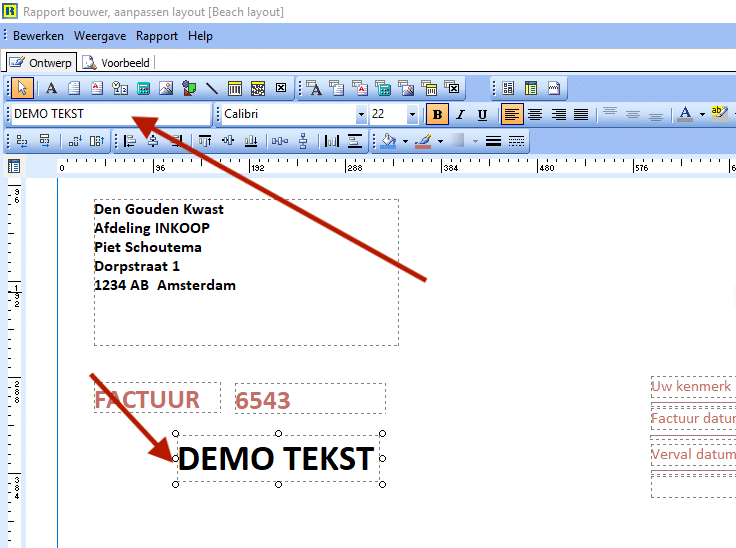
After you put in your in this case a static text in the right place. At the top you have the option to define the content the text. See arrow. But of course you can also adjust other properties such as color, font, alignment, etc. from the toolbar.
Placing dynamic part
A dynamic component (such as customer name, invoice number, unit price, quantity, etc) can be placed via another section of the toolbar. See red outlined section.
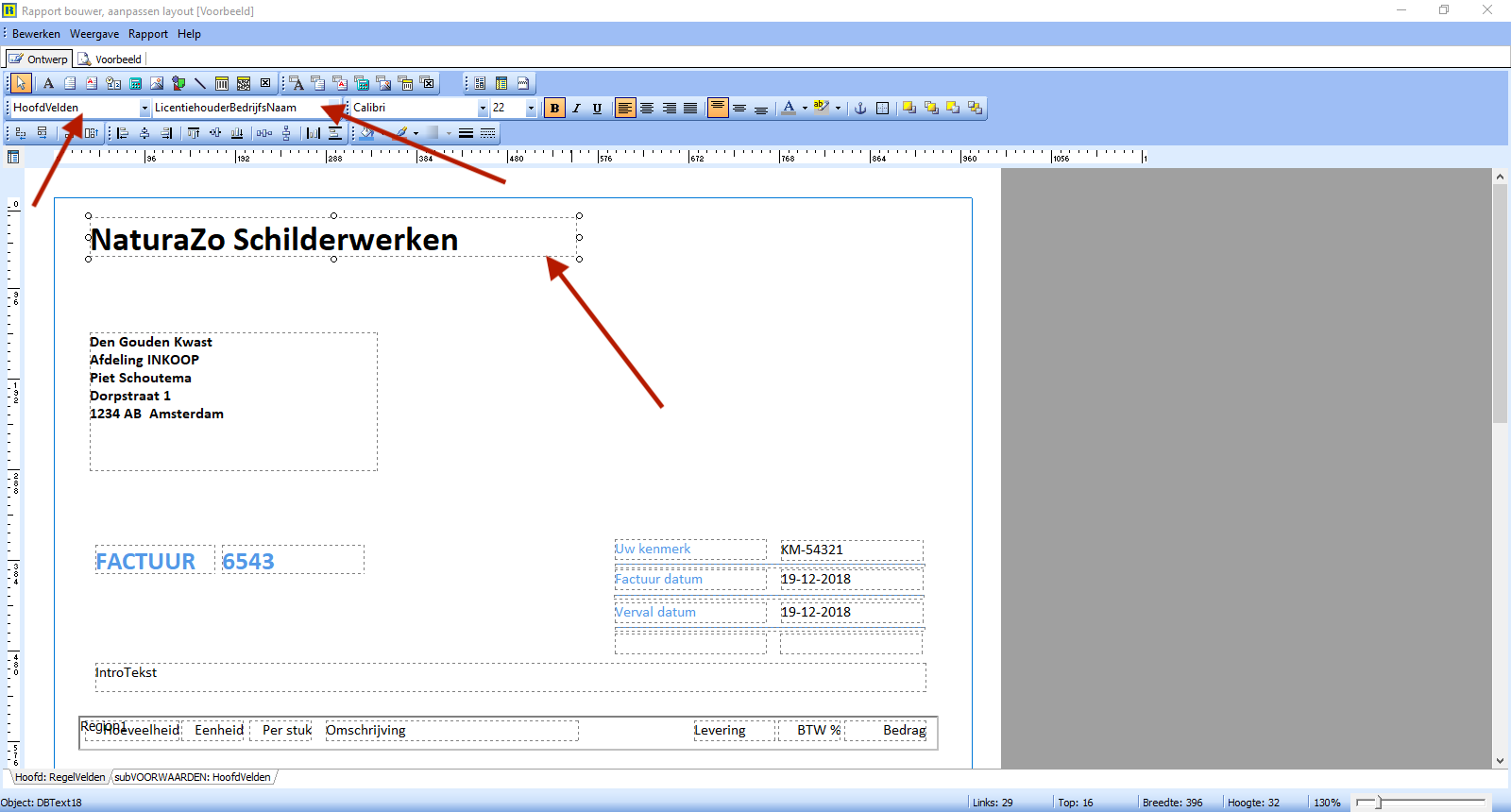
What is important now is for the dynamic item to know where to get its data from. And you can see that at the top (see arrows). These are 2 things, the left one is the main category and the right one is that the item to be shown.
All names of categories and fields may be changed in the near future to further increase readability. Everything until now was for internal use.
There are currently 4 main categories in PERIFACT:
- Category MAIN FEATURES: These are all the fields of an invoice/quote, which have nothing to do with the invoice lines, such as invoice number, invoice date, vendor...
- Category RULES: These are all fields related to an invoice line, such as quantity, unit, price,...
- category customer fields: These are all the fields with the customer data
- Category BUSINESS: These are all fields related to your company, such as company name, Chamber of Commerce number, address,....
Show example
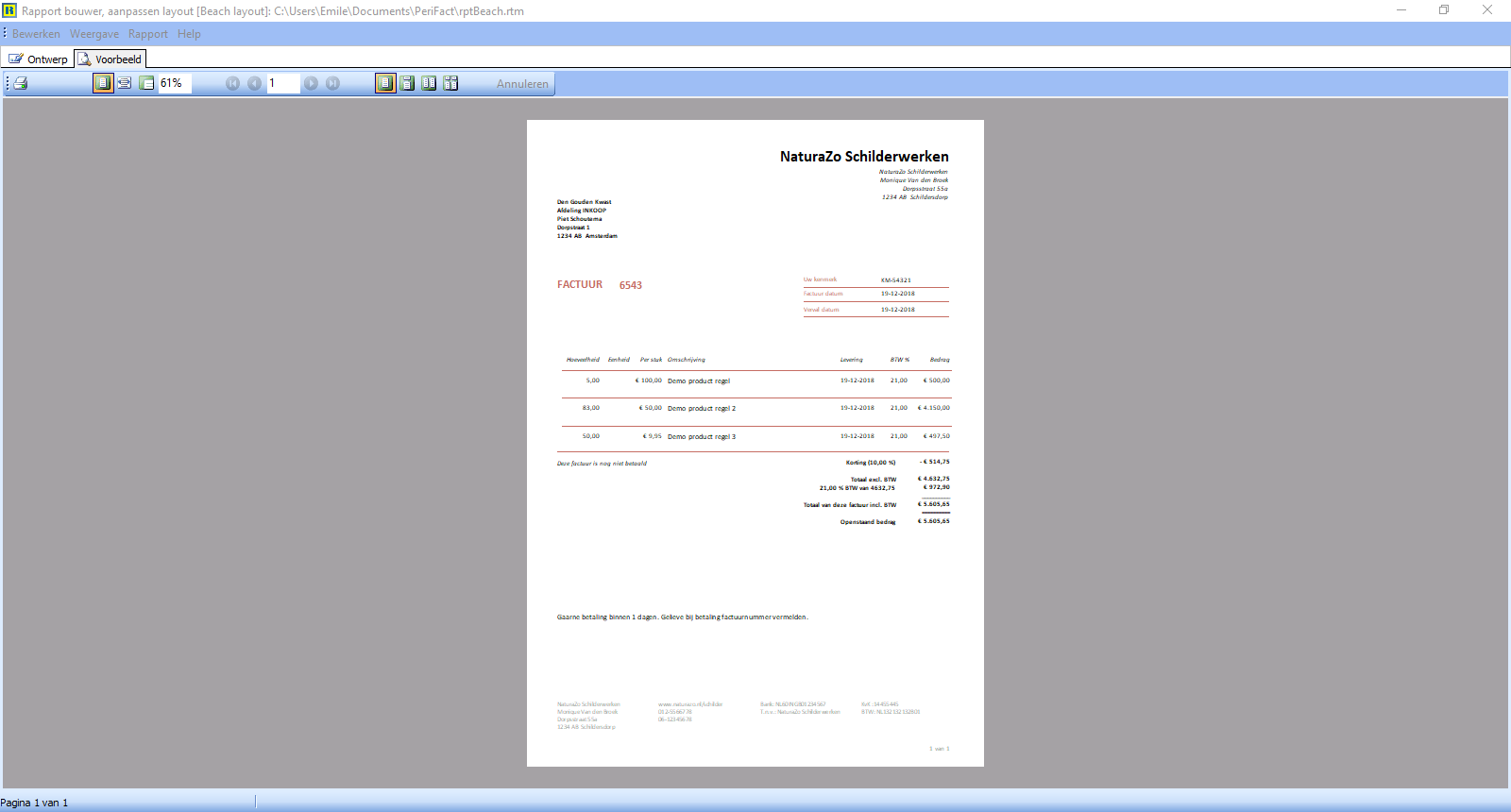
Also in the report builder you can see what it will look like in reality. Then open the [Preview] tab and you will see the result immediately.
Advanced Settings
Almost any part of the report can also be right-clicked. In this, things pop up for very specialized behavior of that section.
INVOICE LAYOUT STRUCTURE
Click on a question mark and text and explanation will appear.